NL
Carbon Complex is een augmented reality (AR)-installatie die verwijst naar het Carboon, een geologisch tijdperk waarin Zuid-Limburg bedekt was met dichtbegroeide moerassen. Deze wouden bestonden uit reuzenplanten zoals Lepidodendron, Sigillaria en Glossopteris. Dit zijn uitgestorven verwanten van de huidige palmvarens en paardenstaarten, waaronder de reuzenpaardenstaart in het nabijgelegen Bunderbos.
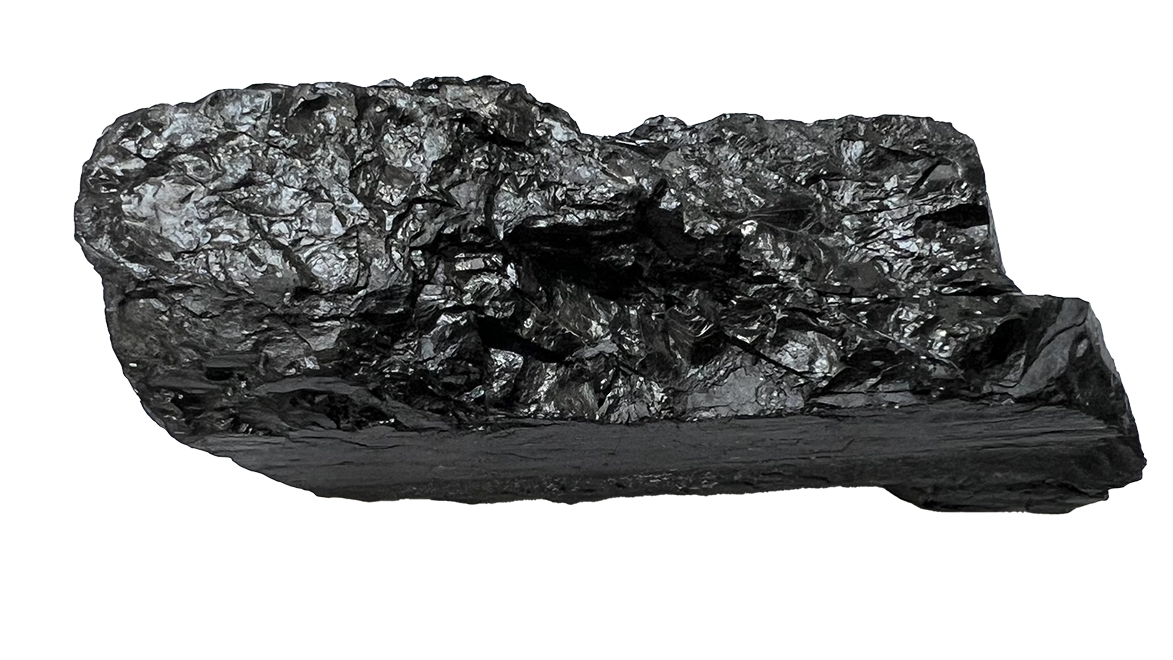
Stuk steenkool | Piece of charcoal
Met hoogtes tot veertig meter, vormden zij de basis voor steenkool. Hoewel in Zuid Limburg geen steenkool meer wordt gedolven, wordt het in Nederland geïmporteerd voor onder andere de staalindustrie. Wereldwijd wordt steenkool nog altijd gebruikt als brandstof. Het is verantwoordelijk voor 25% van de totale globale CO2 uitstoot. Daarnaast is de mijnindustrie vervuilend doordat methaan – een belangrijk broeikasgas – en ammoniak vrijkomen, terwijl mijnafval watersystemen aantast.
Wij verbranden de bossen van 300 miljoen jaar geleden.
De installatie bestaat uit virtuele sculpturen die fossielen uit dit prehistorische ecosysteem herinterpreteren en het verre verleden met een onzekere toekomst verbinden. Het werk is een monumentale reflectie op de diepe geologische tijd van de aarde: onze planeet, die wij met ons handelen zowel vormgeven als vernietigen.
Colofon
Carbon Complex bestaat uit een geprint paneel met een QR code naar een Augmented Reality (AR) installatie die met een smartphone kan worden bezocht. Deze website hoort bij het project. Carbon Complex is gemaakt voor het festival Blunderen op het terrein Op ’t Rentelen in Bunde.
Carbon Complex: AR installatie, 3D modellen, 3D scans, website | Alexandra Crouwers | 2025 | alexandracrouwers.com
Coproductie: Stichting The Butterfly House | Bonnefanten
Met dank aan: Provincie Limburg | Gemeente Meerssen | Mondriaan Fonds | VSB Fonds | Brand Cultuur Fonds
EN
Carbon Complex is an augmented reality (AR) installation that refers to the Carboniferous period, a geological epoch in which South Limburg was covered with densely vegetated swamps. These forests consisted of giant plants such as Lepidodendron, Sigillaria and Glossopteris which are extinct relatives of today’s palm ferns and horsetails – including the great horsetail in the nearby Bunderbos.
Reaching heights of up to forty meters, they formed the foundations for coal. Although coal is no longer mined in South Limburg, it is imported into the Netherlands for use in the steel industry, among other things. Coal is still used as a fuel worldwide. It is responsible for 25% of total global CO2 emissions. In addition, the mining industry is polluting because methane – an important greenhouse gas – and ammonia are released, while mining waste affects water systems.
We are burning the forests of 300 million years ago.
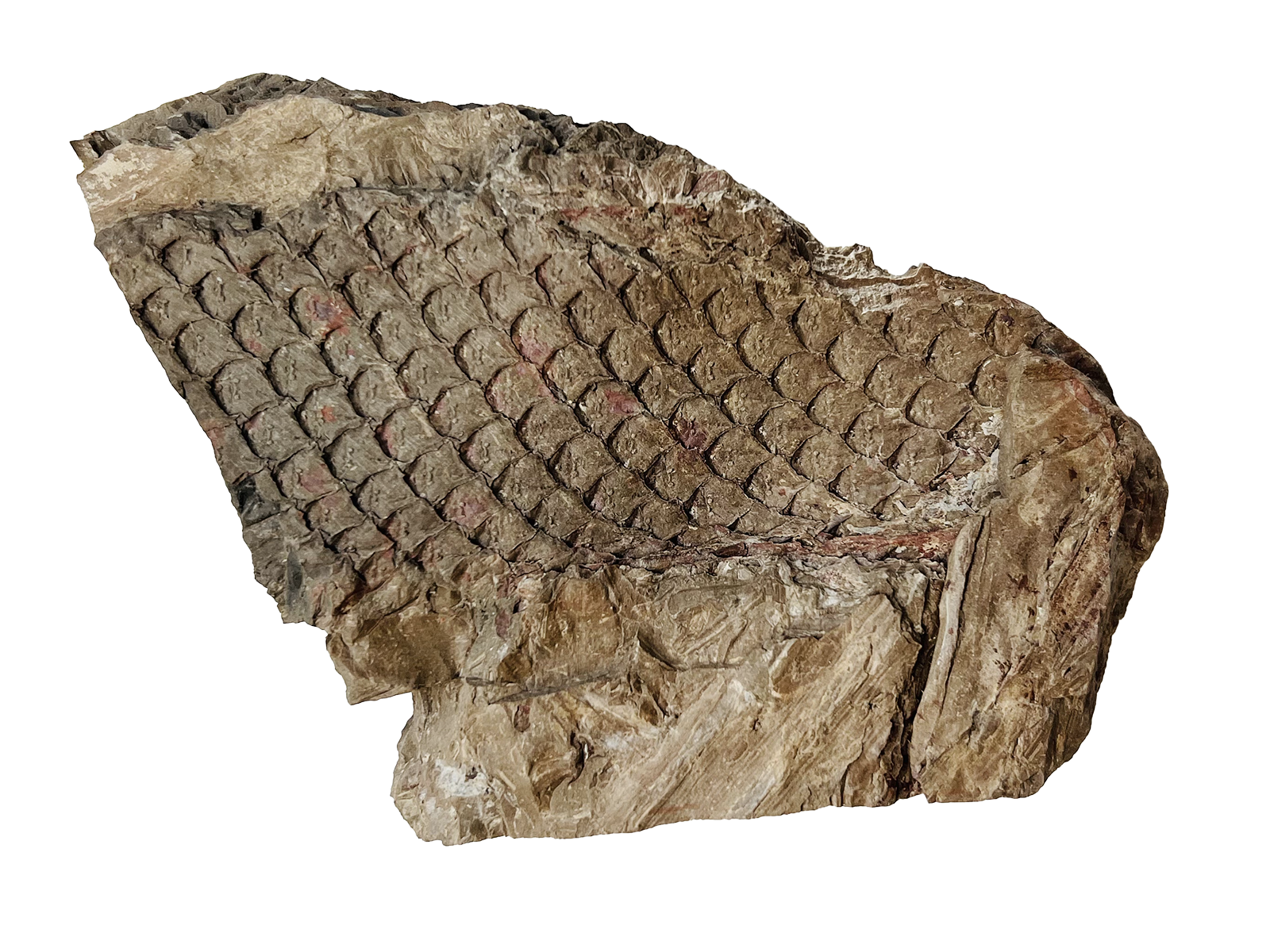
Fossiel van Lepidodendron | Lepidodendron fossil
The installation consists of virtual sculptures that reinterpret fossils from this prehistoric ecosystem, connecting the distant past with an uncertain future. The work is a monumental reflection on the deep geological history of the Earth: our planet, which we both shape and destroy with our actions.
Colophon
Carbon Complex is accessed using a smartphone through a printed panel with a QR code linking to this webpage. This website is part of the project. Carbon Complex was created for Blunderen festival at the Op ’t Rentelen site in Bunde.
Carbon Complex: AR installation, 3D models, 3D scans, website | Alexandra Crouwers | 2025 | alexandracrouwers.com
Coproduction: The Butterfly House foundation | Bonnefanten museum
Supported by: Province of Limburg | Municipality of Meerssen | Mondriaan Funds | VSB Funds | Brand Culture Funds
Lokatie | Location
Carboon bioom reconstructie | Carboniferous biome reconstruction
Deze reconstructie door Paleobiome toont een delta van 300 miljoen jaar geleden, vergelijkbaar met de situatie in de Limburgse regio | This reconstruction by Paleobiome takes us to a delta of 300 million years ago showing a similar situation of the Limburg region.
Het project is geïnspireerd door fossielen in de collectie van het Natuurhistorisch Museum Maastricht. Een complex is een geologische term voor een groep gesteenten die zo met elkaar verbonden zijn (door oorsprong, leeftijd of samenstelling) dat ze als één geheel worden gezien. De titel is ook een hommage aan de projecten Forest Complex en Fire Complex van kunstenaar Uta Kögelsberger, die ecologische uitdagingen van onze huidige bossen documenteren.
Met dank aan Paleobiome voor de reconstructies van planten uit het Carboon.
The project was inspired by fossils in the collection of the Natuurhistorisch Museum Maastricht. A complex is a geological term for a group of rocks that are so closely related (by origin, age or composition) that they are considered a single entity. The title is also a tribute to the Forest Complex en Fire Complex projects by artist Uta Kögelsberger, which document the ecological challenges facing our forests today.
With thanks to Paleobiome for the reconstructions of Carboniferous plants.